
Introduction
Imagine stepping into your yard, greeted by lush greenery, the gentle rustle of leaves, and a sense of tranquility. Trees can transform a house into a home, especially when strategically placed near corners to enhance space, provide shade, and add beauty. Today, we’re diving into 10 Brilliant Trees Suitable for Planting Near House Corners. You’ll learn about a variety of trees that do more than just look good—they can also improve your home’s energy efficiency and curb appeal!
Finding the right tree involves more than just aesthetics; you need to consider your local climate, soil type, and how much space you have. Each of the trees I’ll share not only fulfills practical purposes but also brings character to your landscape. Have you ever thought about how the right tree can accentuate your home? Let’s explore the options together!
Table of Contents
The Benefits of Planting Trees Near House Corners
Planting trees near house corners has multiple benefits. Not only do they add aesthetic value, but they also provide practical advantages such as shade and wind protection. Strategically placed trees can shield your home from harsh sun, which keeps your interiors cooler and can reduce energy bills. Plus, they act as natural sound barriers from street noise.
I remember when my family added a beautiful oak tree to our yard. It not only provided shade on scorching summer afternoons but also became a gathering spot for family picnics. The shade created a cozy nook where we enjoyed everything from reading to outdoor games. Trees enrich our lives in ways we may not initially consider!
Selecting the Right Tree for Your Space
Choosing the right tree requires careful consideration of a few important factors.
Consider Your Climate
Different trees thrive in different climates. If you live in a warmer region, look for heat-resistant species. In contrast, cold climates may require hardy trees that can withstand the frost. Always check your USDA Hardiness Zone when making your selection.
Evaluate Your Soil
Trees have specific soil preferences—some thrive in sandy soil, while others prefer clay or loam. Conducting a simple soil test can help you understand the pH and nutrient levels. This step will ensure your chosen tree will have the best chance for healthy growth.
Assess Available Space
You also need to consider the space around your home. Larger trees may be unsuitable for small yards where roots could potentially crack foundations or pipes. Choose a tree that comfortably fits your available area while complementing your home’s architecture.
Beautiful Trees to Consider
Now let’s delve into specific trees you can plant near your house corners.
Ornamental Trees
These trees are mainly chosen for their beauty and form.
Flowering Cherry
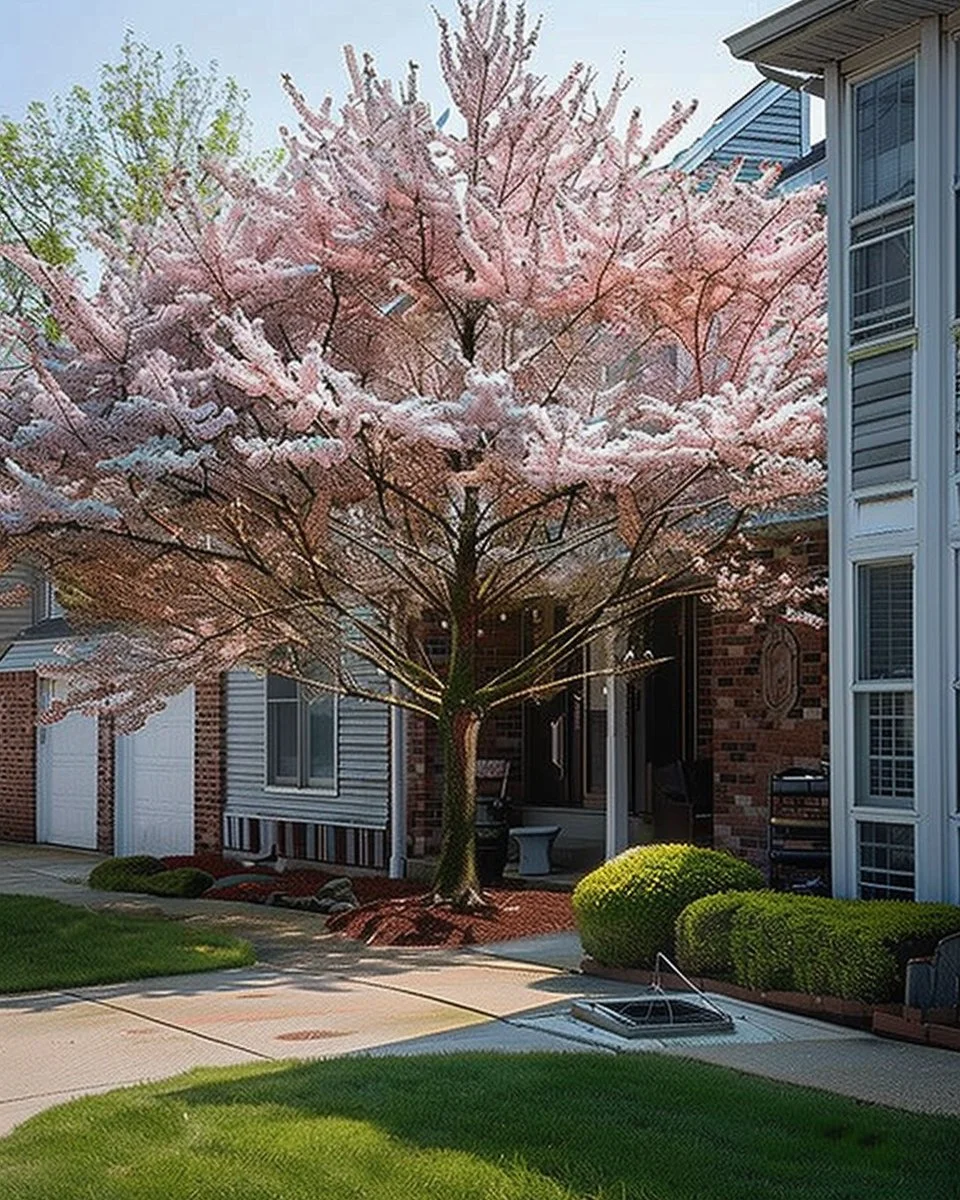
With stunning blooms in spring, the flowering cherry tree adds a burst of color to your landscape. Its delicate pink and white flowers attract pollinators, making it a lively addition to your yard.
Redbud
This small tree showcases vibrant purple-pink flowers in early spring. The redbud has a lovely, heart-shaped leaf, adding interest throughout the seasons. It works well in smaller spaces, fitting comfortably next to house corners.
Evergreen Trees
Evergreens provide year-round greenery and can serve as windbreaks.
Eastern Red Cedar
This drought-tolerant tree has a conical shape and aromatic foliage. It’s perfect for planting near corners to create a sense of privacy and seclusion.
Norway Spruce
Ideal for larger spaces, the Norway spruce has robust branches and can grow quite tall. It’s known for its dense foliage, providing excellent coverage in winter.
Shade Trees
These trees are perfect for providing relief from the sun’s heat.
Sugar Maple
A classic choice, the sugar maple is known for its stunning fall foliage. This tree can grow large, making it ideal for spacious corners where shade is a priority.
River Birch
With its beautiful, peeling bark and graceful form, the river birch is not only attractive but also thrives in moist conditions. It’s excellent for those who live near waterlogged areas.
Tips for Planting and Maintenance
Once you’ve chosen your ideal tree, proper planting and maintenance steps ensure its success.
Best Planting Practices
- Timing: The best time to plant trees is during the dormant season (early spring or fall) when they can establish roots.
- Location: Dig a hole that is twice as wide but just as deep as the root ball. Gently loosen the roots before placing it in the hole.
Seasonal Care Tips
- Watering: Newly planted trees need regular watering, especially during dry spells. Aim for deep watering.
- Mulching: Using mulch can help retain moisture and suppress weeds around the tree base.
- Pruning: Regularly inspect and prune any dead or crossing branches to encourage healthy growth.
Enhancing Outdoor Spaces with Trees
Trees can change the entire mood of your outdoor areas. Consider how your tree can interact with existing structures or landscapes. If you enjoy outdoor gatherings, shade trees help create a comfortable space for socializing. Ornamental trees can be focal points in garden designs that draw the eye and enhance overall appeal.
Have you thought about adding a cozy seating nook beneath a tree? It can make a perfect reading spot or a place to enjoy your morning coffee.
Conclusion
Incorporating trees into your yard can significantly improve its beauty and functionality. Whether you’re looking for shade, privacy, or aesthetic appeal, selecting from these 10 Brilliant Trees Suitable for Planting Near House Corners gives you plenty of options. Remember to assess your space and climate and choose trees that will thrive in your specific environment.
So, go ahead and bring nature closer to your home—your future self will thank you for those cool summer afternoons spent under the shade of a well-placed tree!
FAQs
What is the best time to plant trees near my house?
Spring and fall are ideal times to plant, as trees are dormant and can establish roots more easily.
How far should trees be from my home’s foundation?
Generally, you should plant trees at least 10 to 15 feet away from your home to allow for root growth and prevent any potential damage to your foundation.
Are there any trees I should avoid planting near my house?
Yes, avoid trees with aggressive roots or those that grow too large for small spaces, like willows or certain maples.
How do I care for newly planted trees?
Ensure they get enough water, use mulch to retain moisture, and monitor for any signs of pests or disease.
Will planting trees affect my home’s energy cost?
Absolutely! Properly placed trees can shade your home, keeping it cooler and reducing cooling costs during summer months.