
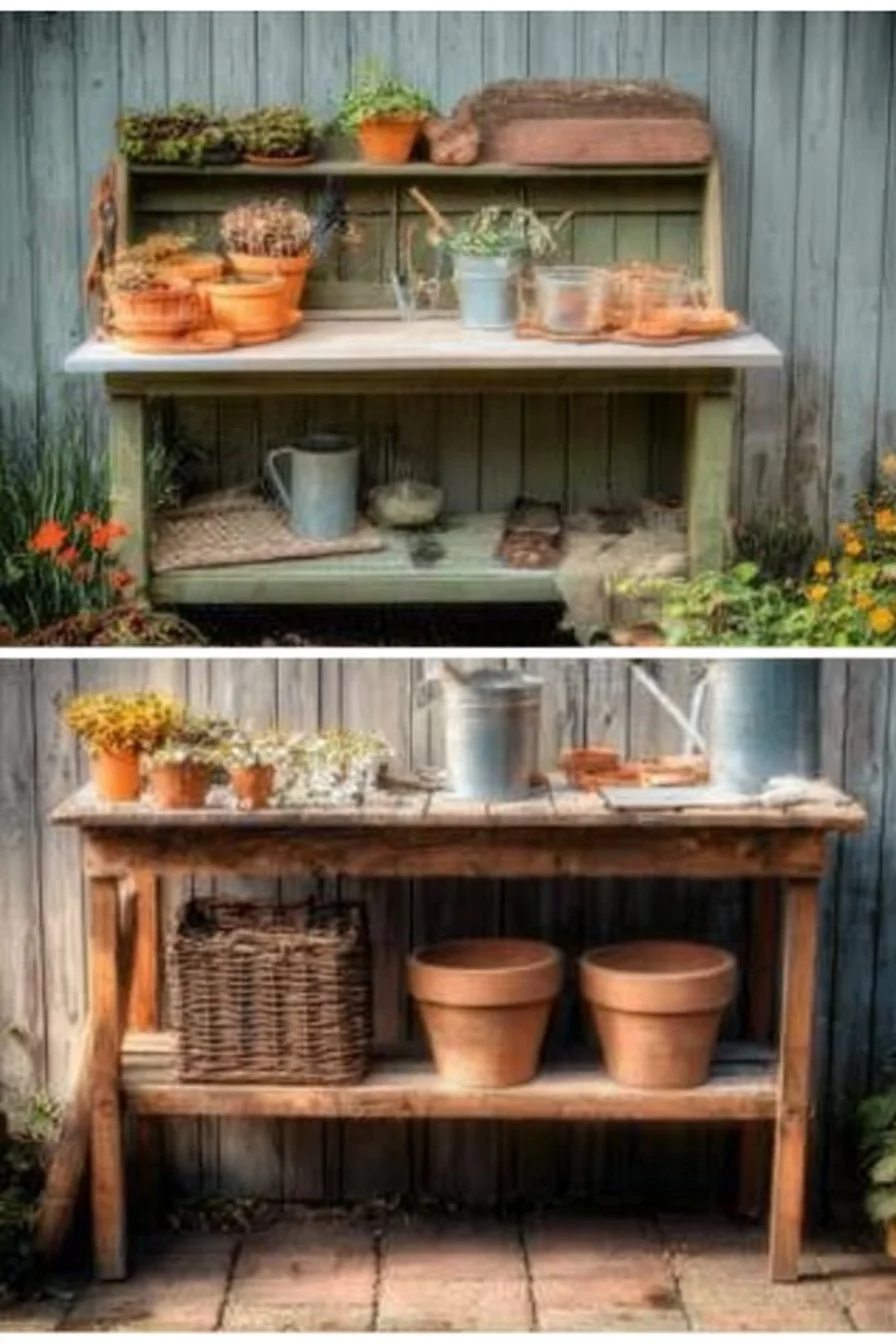
Introduction to 14 Creative and Functional Potting Bench Ideas
Gardeners, rejoice! If you’re looking to elevate your gardening game, consider the extraordinary benefits of a potting bench. A potting bench not only serves as a practical workspace for your potting and planting needs but also acts as a stylish centerpiece in your garden or shed. Have you ever found yourself sifting through messy materials on the floor? Or struggling to find a suitable place to repot your favorite plants? These scenarios are just a few reasons why investing in a potting bench is a game changer.
Creating your own potting bench can be an enjoyable weekend project that combines creativity with function. With a budget-friendly approach, you can build a personalized bench that fits your space, style, and gardening needs perfectly. Imagine strolling into your garden to find a beautiful, functional area dedicated to nurturing your plants. Whether you’re an experienced gardener or just starting, this project suits various skill levels and can typically be completed in a single day.
From reclaimed wood designs to modern minimalist versions, you can customize your bench to reflect your personality. Furthermore, potting benches can be enjoyed outdoors or in a garage or shed, making them versatile and adaptable to different climates and conditions. Let’s explore what makes these DIY potting bench ideas so special, practical, and ultimately, a must-have for any gardening enthusiast.
Table of Contents
Key Benefits of 14 Creative and Functional Potting Bench Ideas
Why You’ll Love This Build
- Durability: Made from sturdy materials, these benches can withstand weather conditions and heavy use.
- Simplicity: Clear instructions make it easy to build, even for beginners.
- Versatility: Use it as a potting area, a planting station, or even for storage.
- Portability: Many designs can be easily moved to suit your needs.
- Weather Resistance: Some materials are resistant to rot and decay, prolonging life outdoors.
- Cost Savings: DIY options allow you to save money while creating something unique.
What Makes It Stand Out
These potting bench ideas shine in originality and customization. Unlike store-bought options, a DIY potting bench allows you to select the materials, dimensions, and design that fit your specific needs and personal style. Whether you choose a rustic barnwood aesthetic or a sleek modern finish, the possibilities are endless. Moreover, you can incorporate features such as shelves, hooks, and storage compartments tailored to your gardening supplies.
These benches are particularly useful during planting seasons, but they can also serve as a beautiful display for potted plants or herbs, inviting the outdoors in. With creativity and a few tools, your potting bench can become a functional work of art that enhances your gardening experience.
Project Specs for 14 Creative and Functional Potting Bench Ideas
At-a-Glance Details
- Skill Level: Beginner to Intermediate
- Estimated Time: 1 Day
- Estimated Cost: $100 – $300 USD
- Dimensions: Varies; typically around 48” x 24” (122 cm x 61 cm)
- Indoor/Outdoor Suitability: Primarily Outdoor
- Tools Needed at a Minimum: Drill, Saw, Screwdriver, Measuring Tape, Level
Materials and Tools for 14 Creative and Functional Potting Bench Ideas
Complete Materials List with Measurements
- Wood:
- 2x4s for the frame (6 pieces, 48”/122 cm each)
- 1×6 for the tabletop (2 pieces, 48”/122 cm each)
- 1×4 for the back panel (1 piece, 48”/122 cm each)
- 2x2s for legs (4 pieces, 36”/91 cm each)
- Screws: 3-inch exterior screws (about 30)*
- Wood Glue: Exterior grade for added stability
- Stain/Paint: Weather-resistant finish (quantity varies based on area coverage)
Complete Tools List
- Drill: For making holes and driving screws
- Circular Saw: Ideal for cutting wood pieces accurately
- Screwdriver: Handy for securing screws
- Measuring Tape: Essential for accurate measurements
- Level: To ensure everything is even
Substitutes and Alternatives
If you’re on a budget, consider using second-hand or reclaimed wood for your potting bench. Pallets can be a fantastic resource. They can be found inexpensively or even for free from local businesses. For screws, ensure you’re using outdoor-rated materials to avoid corrosion. If you don’t have a circular saw, many hardware stores offer cutting services, so you can buy the wood pre-cut to your specifications.
Cut List and Measurements for 14 Creative and Functional Potting Bench Ideas
- 2x4s: 6 pieces at 48” (122 cm) for the frame
- 1x6s: 2 pieces at 48” (122 cm) for the tabletop
- 1x4s: 1 piece at 48” (122 cm) for the back panel
- 2x2s: 4 pieces at 36” (91 cm) for the legs
Ensure you cut the wood with the grain running parallel to the length of the pieces for stability. Pre-drills should be used for all screws to prevent splitting wood.
Safety and Prep for 14 Creative and Functional Potting Bench Ideas
Safety comes first when tackling any DIY project. Always wear personal protective equipment (PPE), such as safety glasses and gloves. Before beginning, ensure that your workspace is clean, organized, and well-ventilated, especially if you’re using any type of stains or finishes. Take your time measuring and marking each piece accurately—this is crucial for ensuring that your potting bench comes together smoothly. Clamping your pieces while you work can also help maintain stability and precision.
How to Build 14 Creative and Functional Potting Bench Ideas – Step-by-Step Directions
Step 1 – Prep and Layout
Begin by laying out all your materials. Measure your workspace to ensure you have enough room to work and place your potting bench. Create a simple sketch detailing how each part will connect. This will guide you throughout the build.
Step 2 – Cut and Label Pieces
Using your saw, cut each piece of wood according to the measurements in the cut list. As you finish each cut, label each piece with a marker to keep things organized.
Step 3 – Dry Fit and Mark Joinery
Before gluing and screwing, dry fit all pieces together to ensure everything fits correctly. Mark where you will need to drill pilot holes for screws to prevent the wood from splitting and to facilitate easier assembly.
Step 4 – Assemble the Frame/Body
Start assembling by securing the legs to the frame with screws. Make sure to set screws at least 1-2 inches from the edges of the wood. Use a level to ensure everything is straight and even.
Step 5 – Reinforce and Square
Check that the frame is square by measuring diagonally from corner to corner and making adjustments as necessary. Add corner braces if needed for additional support and stability.
Step 6 – Attach Surfaces or Panels
Now, attach the tabletop to the frame by screwing down the 1x6s. Ensure you space the screws evenly, about every 12 inches (30 cm) along the edges, to secure the surface firmly.
Step 7 – Sanding and Edge Treatment
Once assembled, sand all edges and surfaces to remove any splinters or rough spots. Start with a coarser grit (80) and finish with a finer grit (220) for a smooth finish.
Step 8 – Finish Application
Apply your chosen stain or paint to the potting bench. It’s best to use a weather-resistant product, especially if your bench will be outside. Apply 2-3 coats, allowing appropriate curing time between each coat.
FAQ Section
What type of wood is best for a potting bench?
Cedar and redwood are both excellent choices as they are resistant to rot.
Can I use recycled materials?
Yes, reclaimed wood or pallets are cost-effective and environmentally friendly options.
How do I maintain my potting bench?
Regularly clean dust and dirt off the surfaces and reapply protective finishes as needed.
Is it possible to add storage to my potting bench?
Absolutely! Consider adding shelves, hooks, or bins to keep tools organized.
What are some common measurements for a potting bench?
Typical dimensions are around 48” (122 cm) wide, 24” (61 cm) deep, and 36” (91 cm) high. Adjust based on your preferences.
How can I protect my potting bench from the weather?
Make sure to use a weather-resistant finish and consider putting a cover on it during extreme weather conditions.