
Have you ever felt that your home’s exterior could use a little more charm and character? A well-placed tree can do wonders for your landscape, especially in those often-overlooked house corners. If you’ve got some bare spots around your home, you’re in for a treat. In this guide, we’ll explore the 10 Best Trees for House Corners that not only beautify your property but also provide shade, privacy, and even a haven for local wildlife. Whether you’re looking to plant something small and compact or tall and majestic, there’s something here for everyone.
Table of Contents
Understanding the Benefits of Corner Trees
Enhancing Curb Appeal
One of the most immediate perks of planting trees in your corners is how they can dramatically enhance your home’s curb appeal. Imagine a beautiful tree dotting the edge of your home, providing a clear definition between your property and the sidewalk. Not only do trees add depth and texture to your landscape, but they also create a focal point that draws the eye.
Providing Shade and Privacy
Another great reason to invest in trees for your corners is shade. On hot summer days, a strategically placed tree can provide respite from the sun. If your corner trees are tall enough, they might even shield some of your windows from unwanted views, adding a layer of privacy to your sanctuary.
Supporting Local Wildlife
Trees are more than just a beautiful addition to your landscape; they are vital ecosystems. By planting trees in your corners, you provide habitats for birds and beneficial insects. This not only enhances your garden’s biodiversity but also helps in managing pest populations naturally.
Factors to Consider When Choosing Trees
Tree Size and Growth Habit
When selecting trees for your house corners, consider how large they will grow. A small tree like a Japanese maple can fit perfectly in tight spaces, while larger trees such as oaks might require more room both above and below the ground. It’s important to choose a tree that won’t overwhelm your space.
Climate and Soil Type
Different trees thrive in different climates and soil conditions. Before planting, know your USDA hardiness zone and test your soil. Some trees prefer acidic soil, while others thrive in loamy or sandy conditions. Choosing a tree suited to your environment will ensure long-term success.
Maintenance Requirements
Some trees require more upkeep than others. If you have a busy lifestyle or aren’t keen on gardening, look for low-maintenance trees that will flourish with minimal effort. Think about factors such as watering frequency, pruning needs, and susceptibility to pests.
The 10 Best Trees for House Corners
Ornamental and Small Trees
Japanese Maple
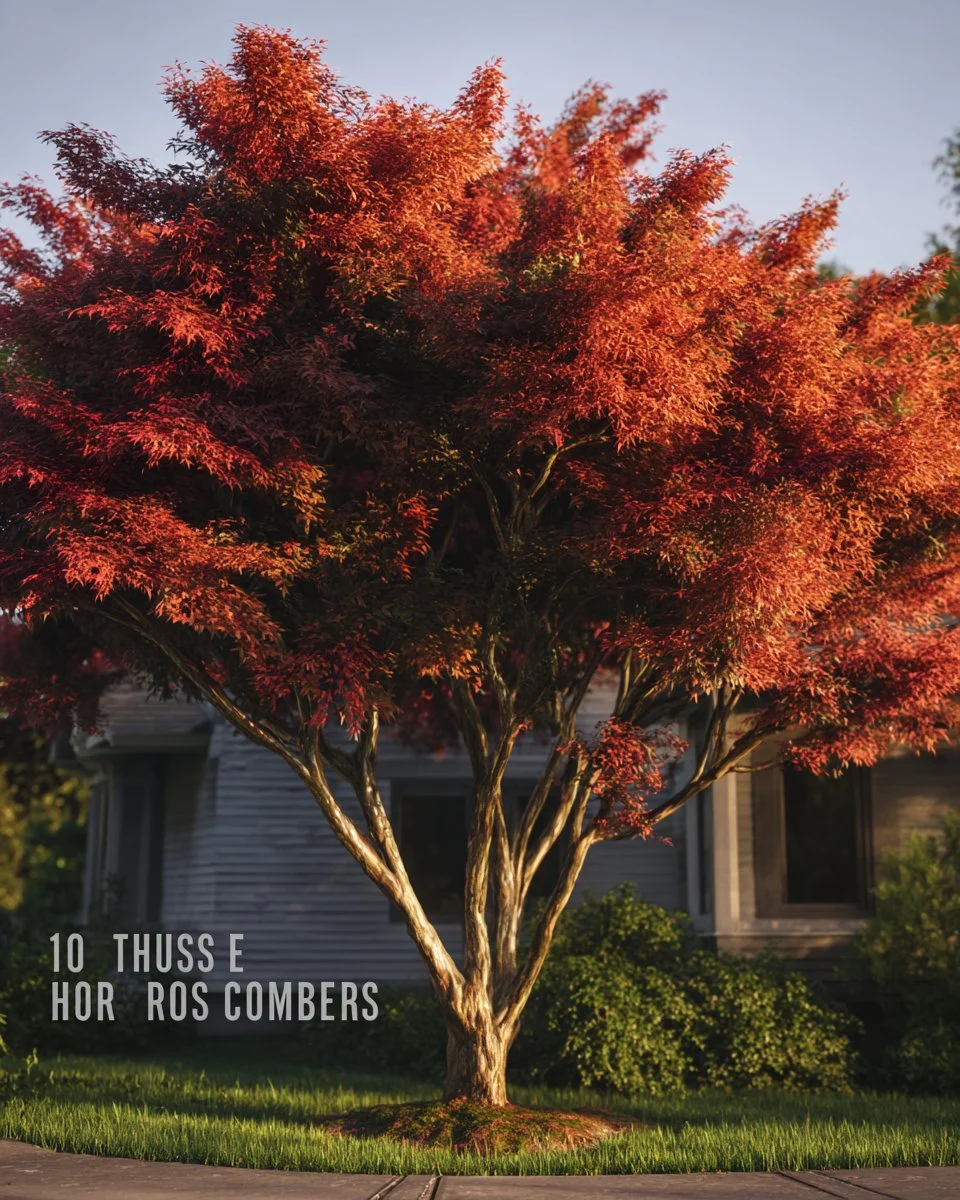
Japanese maples are stunning small trees known for their vibrant foliage. They grow to about 15-25 feet tall and can thrive in various soil types. Planted in a corner, they provide an excellent pop of color and an air of elegance.
Flowering Dogwood
This tree is beloved for its beautiful spring blooms and wonderful fall colors. At around 15-30 feet tall, it’s perfect for smaller spaces. With their lovely tiered branches and showy flowers, flowering dogwoods make corners truly enchanting.
Medium-Sized Trees
Redbud
The redbud tree is famous for its striking pink blossoms in early spring, which brighten any landscape. With a growth height of 20-30 feet, it presents a great option for those looking for a showy yet manageable tree.
Crape Myrtle
Known for its long-lasting blooms throughout summer, the crape myrtle can range from 15 to 25 feet tall. This tree not only provides beautiful flowers but also offers lovely fall foliage, making it an exciting choice for any corner.
Large Trees
Oak
If you have room for a larger tree, consider an oak. Growing up to 50 feet or more, oaks provide substantial shade and a majestic presence. They’re also excellent for wildlife, supporting various birds and insects.
Pine
Pine trees are evergreen, which means they provide year-round greenery, helping to enhance your landscape even in winter. Their height and conical shape make them ideal for corners, creating natural privacy screens.
Planting and Care Tips for Corner Trees
Best Planting Practices
When planting trees, consider the best time, usually early spring or fall. Dig a hole twice as wide as the root ball but no deeper than the tree’s height. Keep the top of the root ball above ground level and backfill gently.
Watering and Mulching
Regularly watering newly planted trees is crucial. They need time to establish roots in their new environment. Applying mulch around the base can help retain moisture and keep weeds at bay, providing a healthy start.
Pruning and Maintenance
We all want our trees to flourish. Pruning is essential for shape and health, especially during their early years. Remove any dead or diseased branches, and shape them for a healthy, attractive appearance.
Real-Life Transformations
I remember helping a friend plant a flowering dogwood in the corner of her yard that eventually became a yearly highlight. Every spring, it burst into a spectacular array of pink, drawing compliments from everyone passing by. It transformed her once dull corner into a vibrant oasis, creating not just beauty, but cherished memories for family gatherings underneath its blooms.
Conclusion
Choosing the right trees for your house corners can bring life and beauty to your home. By considering the many factors—size, climate, and maintenance—you can find the perfect fit from the 10 Best Trees for House Corners. Remember, these trees are not only about aesthetics; they enhance your home’s environment, provide shade, and support wildlife. So why not start planning your landscape today?
FAQs
What are the best trees for small yards?
Trees like the Japanese Maple and Flowering Dogwood are excellent choices for smaller gardens due to their compact size.
How much sunlight do corner trees need?
Most trees prefer full sunlight, so choose a spot that gets at least six hours of sun each day, but some, like the Redbud, can tolerate partial shade.
How often should I water newly planted trees?
It’s typically recommended to water newly planted trees deeply once every week, more frequently during hot and dry spells.
What trees are best for privacy?
Larger trees like Oaks and Pines can provide significant privacy when planted strategically in corners.
Can I plant a tree too close to my house?
Yes, it’s crucial to leave adequate space between the tree and your house to allow for its mature size and avoid damage to your foundation.