
Introduction
Have you ever stepped into a garden filled with vibrant blooms and felt an instant lift in your spirits? Roses, with their enchanting colors and captivating fragrances, have a way of doing just that. As you consider creating your own floral haven, the possibilities can feel overwhelming. That’s where our guide comes in! Today, we’ll explore 27 Rose Garden Ideas in the Backyard Space that will inspire you to transform your outdoor area into a stunning paradise. You’ll learn how to choose the right varieties, layout options, care tips, and design elements that will bring your rose garden dreams to life. Let’s dig in!
Table of Contents
Choosing the Right Roses for Your Space
When you set out to cultivate a rose garden, selecting the right varieties is crucial. Roses come in countless shapes, sizes, and colors. Consider your climate and the amount of sunlight your garden receives. If you have limited space, opt for smaller varieties or climbing roses that can be trained on trellises.
Classic Varieties to Consider
Some timeless options include the fragrant Hybrid Tea roses, which are perfect for cut flowers. Floribundas, known for their clusters of blooms, add vibrant color to your garden and create a lush effect.
Unique and Rare Options
If you’re looking for something a bit different, try adding David Austin roses. These English roses possess old-world charm and delightful scents that will enchant any gardener.
Designing Your Rose Garden Layout
A well-thought-out layout can enhance both the beauty of your roses and the overall ambiance of your backyard.
Traditional Formal Gardens
Formal rose gardens typically feature symmetrical designs with neatly manicured paths. Incorporate geometric shapes, such as circles or squares, to maintain a structured look. Surround roses with evergreen shrubs for year-round appeal.
Casual Cottage Gardens
Conversely, if you prefer a more relaxed vibe, consider a cottage garden. This design style mixes roses with other perennials and annuals, allowing for a vibrant, overflowing effect. Randomly place your roses among daisies and lavender for a charming look.
Vertical Gardens for Smaller Spaces
If your backyard space is limited, vertical gardens can be an ideal solution. Use trellises or living walls to grow climbing roses that cascade down, creating a dynamic display without taking up much ground space.
Enhancing Your Rose Garden with Accessories
Accessories can elevate your rose garden, adding personality and charm.
Garden Structures and Trellises
Think about incorporating trellises and arches for climbing roses. These structures not only provide support but can also serve as focal points.
Pathways and Borders
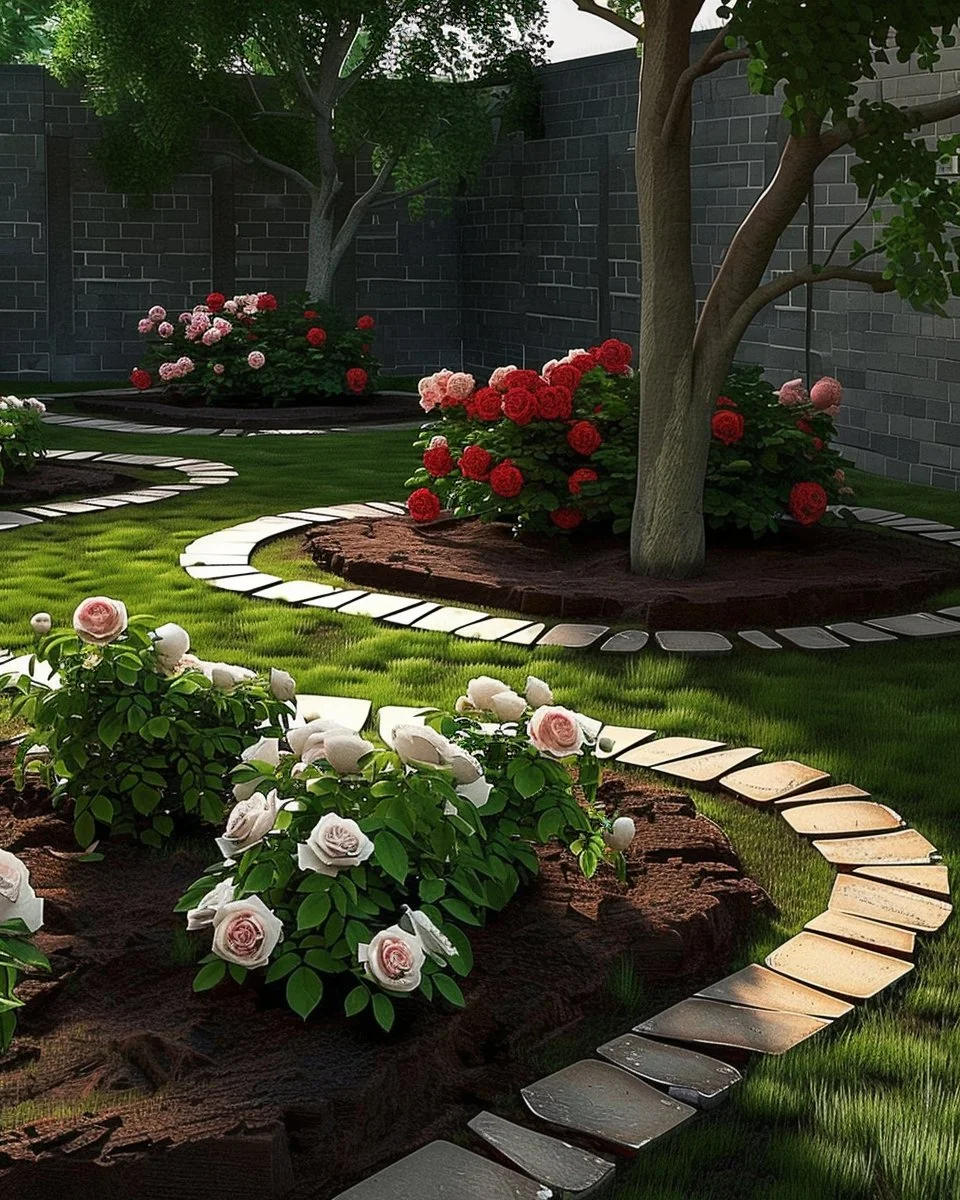
Create meandering pathways made of stone or gravel that lead visitors through your rose garden. Adding borders with contrasting plants or decorative stones helps define the space and showcases your roses beautifully.
Water Features for Serenity
A small pond or fountain can bring a sense of tranquility to your rose garden. The sound of water creates a soothing backdrop, enhancing your experience as you relax among the blooms.
Maintenance Tips for Healthy Roses
Caring for your rose garden is crucial to keeping it vibrant and healthy.
Watering and Feeding Your Roses
Ensure your roses receive deep watering at least once a week, especially during dry spells. Regular feeding with a balanced fertilizer will promote robust blooms and healthy foliage.
Pest Control and Disease Management
Keep an eye out for common pests like aphids and spider mites. Natural solutions like neem oil can effectively manage pests while being gentle on the environment. If any signs of disease, such as black spots or powdery mildew, appear, be proactive in addressing them to ensure the health of your plants.
Pruning and Seasonal Care
Regular pruning helps shape your roses and encourages more blooms. Do this in early spring, cutting back dead or weak stems. Seasonal care adjustments, such as mulching, can also help retain soil moisture and suppress weeds.
Seasonal Color and Variation
To keep your garden attractive year-round, plan for seasonal blooming periods.
Planning for Year-Round Interest
Selecting a variety of roses that bloom at different times will ensure a continuous display of color. Pairing them with other flowering plants can further enhance visual appeal throughout the seasons.
Companion Planting with Roses
Consider companion planting to bolster your garden’s health and aesthetic appeal. Flowers like marigolds or herbs like lavender not only add beauty but can also protect your roses from pests.
Personal Touches and Storytelling
Make your rose garden uniquely yours by adding personal touches.
Adding Art and Decor Elements
Incorporate garden art—such as sculptures, decorative birdhouses, or whimsical fairy lights—to create a story within your garden. These elements invite curiosity and make your space feel more inviting.
Creating Enchanted Spaces
Designate a cozy seating area among your roses where you can retreat with a book or enjoy morning coffee. Shade provided by trees or a charming pergola can enhance relaxation and ensure your garden is as much about enjoying nature as it is about nurturing plants.
Conclusion
Creating your own rose garden is an incredibly rewarding experience that can bring joy to you and the community around you. With 27 Rose Garden Ideas in the Backyard Space to inspire you, there’s a wealth of knowledge to tap into as you design, plant, and maintain your floral haven. Embrace your creativity, choose the right sections, and get your hands dirty in the soil. There’s nothing quite like the satisfaction of watching your roses bloom and thrive in the space you’ve cultivated. Happy gardening!
FAQs
What is the best time to plant roses?
The best time to plant roses is in the spring after the last frost or in the fall before the ground freezes. This allows the plants to establish roots before extreme temperatures hit.
How much sunlight do roses need?
Roses thrive in full sun, requiring at least 6 to 8 hours of direct sunlight per day for optimal growth and blooming.
How do I prevent diseases in my rose garden?
Maintain good air circulation around your plants, avoid overhead watering, and regularly check for signs of pests or disease to catch problems early.
What are some companion plants for roses?
Marigolds, lavender, and salvia are excellent companion plants. They can help repel pests and enhance the beauty of your rose garden.
How often should I prune my roses?
Pruning should be done in early spring before new growth begins. Remove dead or weak stems and shape the plant to promote healthy growth and blooming.