
Introduction
We all cherish our little personal havens, don’t we? Picture this: You’re sipping coffee on your patio, enjoying a sunny morning, when suddenly, a neighbor’s squirrel pops up on your fence, making you feel like you’re living in a fishbowl. Privacy is essential, especially in our homes where we should feel at ease. That’s where the right trees come into play. Not only can they enhance your landscape, but they can also provide a natural shield against prying eyes. In this article, we’re diving into the 10 Best Trees For Privacy that can transform your yard into a secluded retreat. Whether you crave towering conifers or flowering varieties, we’ve got the perfect picks for you!
Table of Contents
Benefits Of Using Trees For Privacy
Creating a private yard isn’t just about aesthetics; it’s about enhancing your life at home. Trees serve as natural barriers against noise, wind, and even dust. Imagine hosting a barbecue or enjoying a peaceful evening without the distraction of nearby neighbors. Furthermore, trees can improve air quality, provide shade, and create habitats for wildlife, turning your garden into a sanctuary. There’s a reason many people consider investing in trees — the benefits go beyond simple privacy.
Characteristics To Look For In Privacy Trees
Choosing the right tree involves considering a few key characteristics. You want trees that grow quickly to provide immediate coverage, but also those that maintain their shape and density over time. Here are a few factors to keep in mind:
- Height and Width: Depending on your space, you might want tall, narrow trees or wider varieties that fill out quickly.
- Growth Rate: Fast-growing trees can offer immediate results, while slower-growers might require more patience.
- Foliage Type: Evergreens retain their leaves year-round, providing consistent coverage. Deciduous trees offer beautiful seasonal changes but lose their leaves in fall.
- Soil and Sun Requirements: Make sure the trees you choose are suited for your local climate and soil conditions.
Top 10 Best Trees For Privacy
Let’s get into the nitty-gritty of the 10 Best Trees For Privacy, categorized by type.
Evergreen Trees
Evergreens are often the preferred choice for privacy as they maintain their foliage throughout the year.
Leyland Cypress
Leyland Cypress is a fast-growing tree, reaching heights of up to 60 feet! Its dense foliage creates an effective screen in just a few years. Ideal for larger properties, they can tolerate a variety of soils and are relatively low-maintenance.
Eastern White Pine
This tree can grow to an impressive height of 50-80 feet and offers soft, feathery needles that add a gentle, serene look to your garden. It grows relatively fast and prefers well-drained soil.
Arborvitae
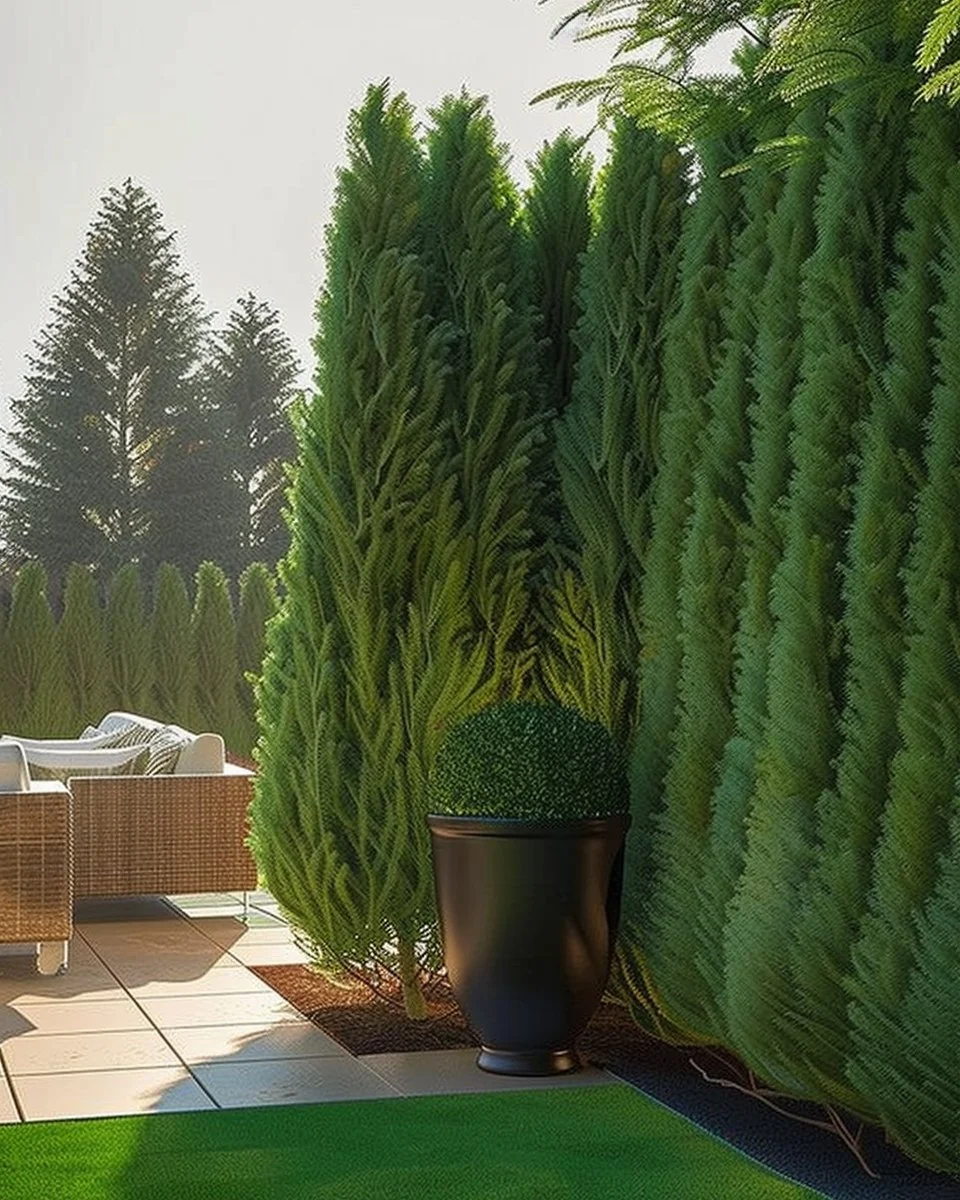
These trees are popular for their compact size and dense foliage, reaching heights between 10 and 25 feet. They’re perfect for smaller yards, providing a beautiful, green hedge. ‘Emerald Green’ Arborvitae is favored for its narrow growth habit.
Deciduous Trees
While they shed their leaves in winter, deciduous trees can bring beauty and seasonal interest to your yard.
Red Maple
Famous for its stunning fall colors, the Red Maple can grow up to 40 feet tall. They thrive in various soil types and provide excellent shade in the summer months.
Oak
These majestic trees can grow quite large, offering a sprawling beauty that many admire. Oaks are durable and can live for centuries, providing homes for birds and other wildlife.
Sweetgum
With its star-shaped leaves and beautiful fall color, Sweetgum can grow between 60-100 feet tall. They thrive in a variety of conditions, providing a lovely canopy along with privacy.
Flowering Trees
For those who love a pop of color, flowering trees offer privacy and seasonal beauty.
Flowering Cherry
These trees burst into a breathtaking display of blossoms in spring, making them a favorite for many gardeners. They grow to about 30 feet tall and add a lovely aesthetic to your yard while also screening the view.
Magnolia
Magnolias are known for their large, fragrant flowers and glossy leaves. Some varieties can grow up to 80 feet tall, providing both beauty and privacy.
Redbud
Known for its stunning pink flowers in spring, the Redbud typically reaches around 20-30 feet tall. It adds character to your garden while also providing some privacy.
Tips For Planting And Maintaining Privacy Trees
Once you’ve selected your trees, it’s essential to plant and maintain them correctly. Here are some tips:
- Spacing: Give trees enough room to grow—plants that are too close can compete for nutrients and may not thrive.
- Watering: Ensure your trees receive adequate water, especially during the first couple of years when they establish their roots.
- Mulching: Using mulch helps retain moisture in the soil and suppresses weeds that can compete with your trees.
- Pruning: Regularly prune your trees to maintain their shape and health. This will enhance their ability to provide privacy.
Conclusion
Choosing the right trees can significantly enhance the privacy of your outdoor space while adding beauty and value to your home. The 10 Best Trees For Privacy are not just utilitarian; they can transform your yard into a serene retreat where you feel safe and relaxed. Whether you prefer evergreens or flowering varieties, there’s a tree out there that fits your needs. So, get planting and enjoy the natural beauty and privacy they provide!
FAQs
What are the fastest-growing trees for privacy?
Leyland Cypress and Arborvitae are among the fastest-growing trees that provide excellent privacy.
How far apart should I plant my privacy trees?
It depends on the type of tree. As a general rule, plant them 4 to 6 feet apart for optimal growth and coverage.
Do privacy trees require a lot of maintenance?
Most privacy trees require minimal maintenance, mainly occasional pruning and watering during dry spells.
Can I use flowering trees for privacy?
Yes! Flowering trees like the Flowering Cherry or Redbud can provide beauty and privacy.
What’s the best time to plant privacy trees?
Early spring or fall is the best time to plant trees to ensure they establish roots before harsh weather.